Skip to content
Blade Profile · Profiling 101

Performance Profiling

Your Blade Has a Shape.
It Changes How It Feels.

Profiling changes the runner’s toe-to-heel contour. Small geometry changes can shift the balance of agility, acceleration, speed, stability, glide, and stance.

Elite E-P3 profiler in operation
Elite blade profiling guide showing profile families and toe-to-heel geometry

What a Profile Is

Toe-to-Heel Geometry.
Measured in Feet.

The profile is the longitudinal contour along the skating surface. A hollow is different: it is the bottom groove between the edges and is measured in inches.

A single-radius profile uses one curve. Performance profiles combine multiple curves to distribute different characteristics across the runner.

Profile defines the platform.Hollow influences how the edges engage. EDGE evaluates both as one connected blade-performance system.

The Central Tradeoff

More Rocker or More Contact.
Every Choice Changes the Balance.

These are tendencies—not guaranteed outcomes. The player’s feedback remains essential.

A

Agility

More rocker toward the relevant blade zone can support tighter direction changes and transitions.

X

Acceleration

Front geometry and balance point can influence initial movement and how the player loads the blade.

S

Stability

More contact and flatter geometry can create a more planted feeling at speed.

G

Glide

A longer effective contact area can support efficient travel through longer skating phases.

Profile Families

Different Geometries.
Different Ways to Balance Feel.

Single radius

Monos

A familiar one-radius platform. Flatter Monos generally favor glide and stability; more rockered Monos generally favor agility.

Heel Glide

Duos, Triples + Quads

Multiple curves progress from a more agile front section toward flatter rear geometry for glide and stability.

Heel Glide

Polaris

Elite’s evolution of the Quad family, designed for smooth transitions with a lighter heel feel across the family.

Center Glide

SCS Series

Flatter geometry through the center with more rocker at both ends, offered across agility-to-stability variants.

Center Glide

Center Flats

A centered flat section adds contact and stability, with the length and placement changing the feel.

Goalie

Goalie Profiles

Flatter Mono and Duo options support stability, balance, lateral power, and a more active front section when selected.

How EDGE Profiles

Chosen With Context.
Applied With the E-P3.

The process starts with the player and ends with a documented reference.

01

Assess

Review player context, steel, current setup, and feedback.

02

Prioritize

Clarify the desired balance of agility, speed, stability, and glide.

03

Select

Choose a responsible starting profile from the available Elite system.

04

Apply

Profile the steel using the Elite E-P3.

05

Document

Keep the selected reference connected to the player and steel.

06

Evaluate

Use meaningful on-ice feedback before making another change.

Profile Preservation

Profiling Is Not
A One-Time Graphic.

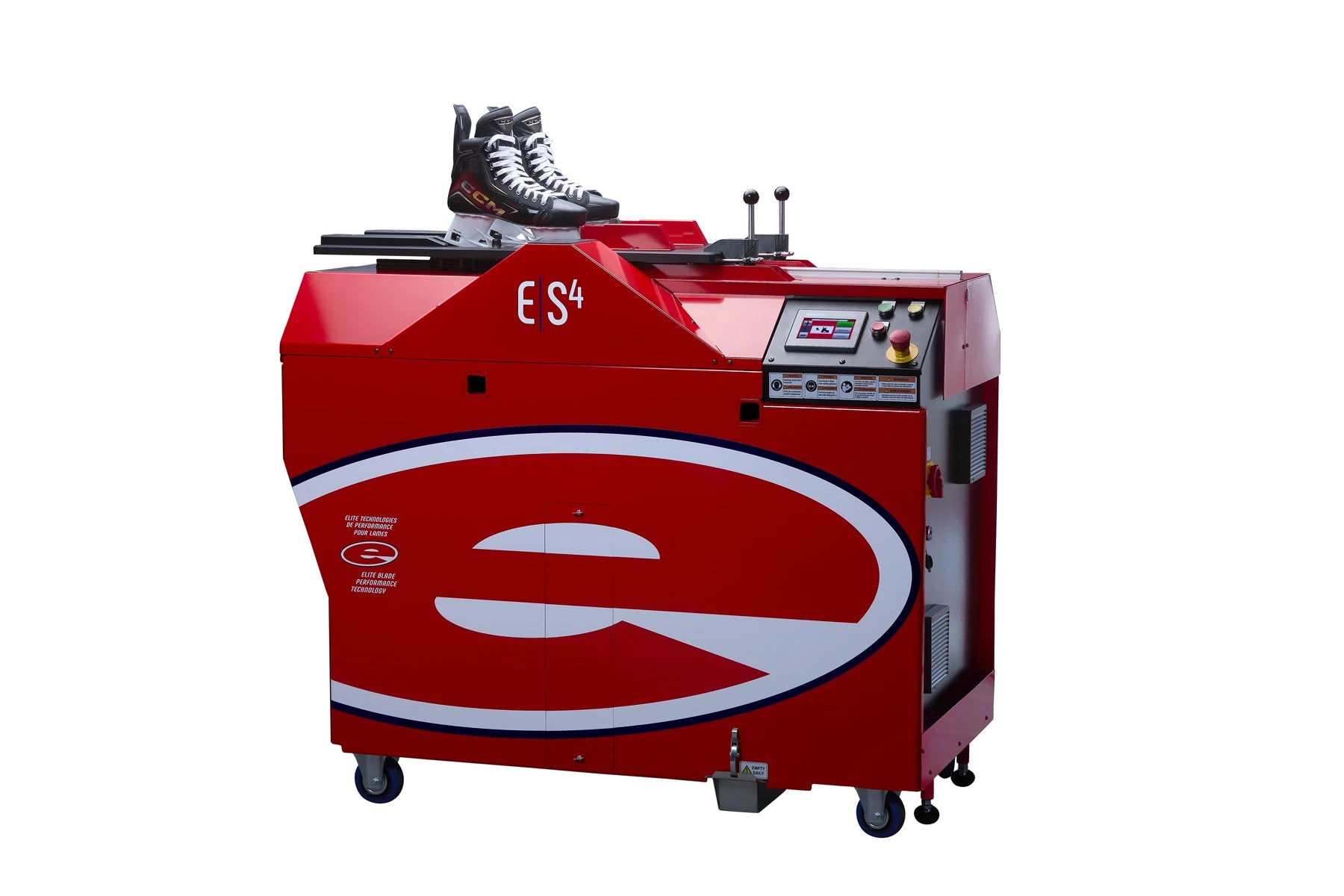
Repeated sharpening can change the toe and heel if material is removed unevenly. The Elite E-S4 scans the blade and varies speed and pressure along its length to help preserve the existing profile.

EDGE treats sharpening and profiling as connected operations: select the geometry, document it, and protect the reference through future preparation.

Explore E-S4 + E-P3 Technology
Elite E-S4 sharpener in operation

Request Profiling

Your Profile Starts
With How You Skate.

Share the player’s current setup, feedback, and goals. EDGE will follow up about assessment and profiling availability.

  • Player and equipment context
  • Current hollow and profile when known
  • Performance priorities and on-ice feedback
  • E-P3 application and documented reference

Organize the Feedback

Start With the Player.
Then Choose the Geometry.

The EDGE Profile Assessment helps turn “they feel off” into a more useful equipment conversation.